
TindaGo
Sell, track stock, and list utang in one app, on the phone the store already owns.
- Role
- Product design and build
- Users
- 129+ stores and counting
- Model
- Free to start, ₱299 monthly
- Status
- Live across Mindanao and Visayas
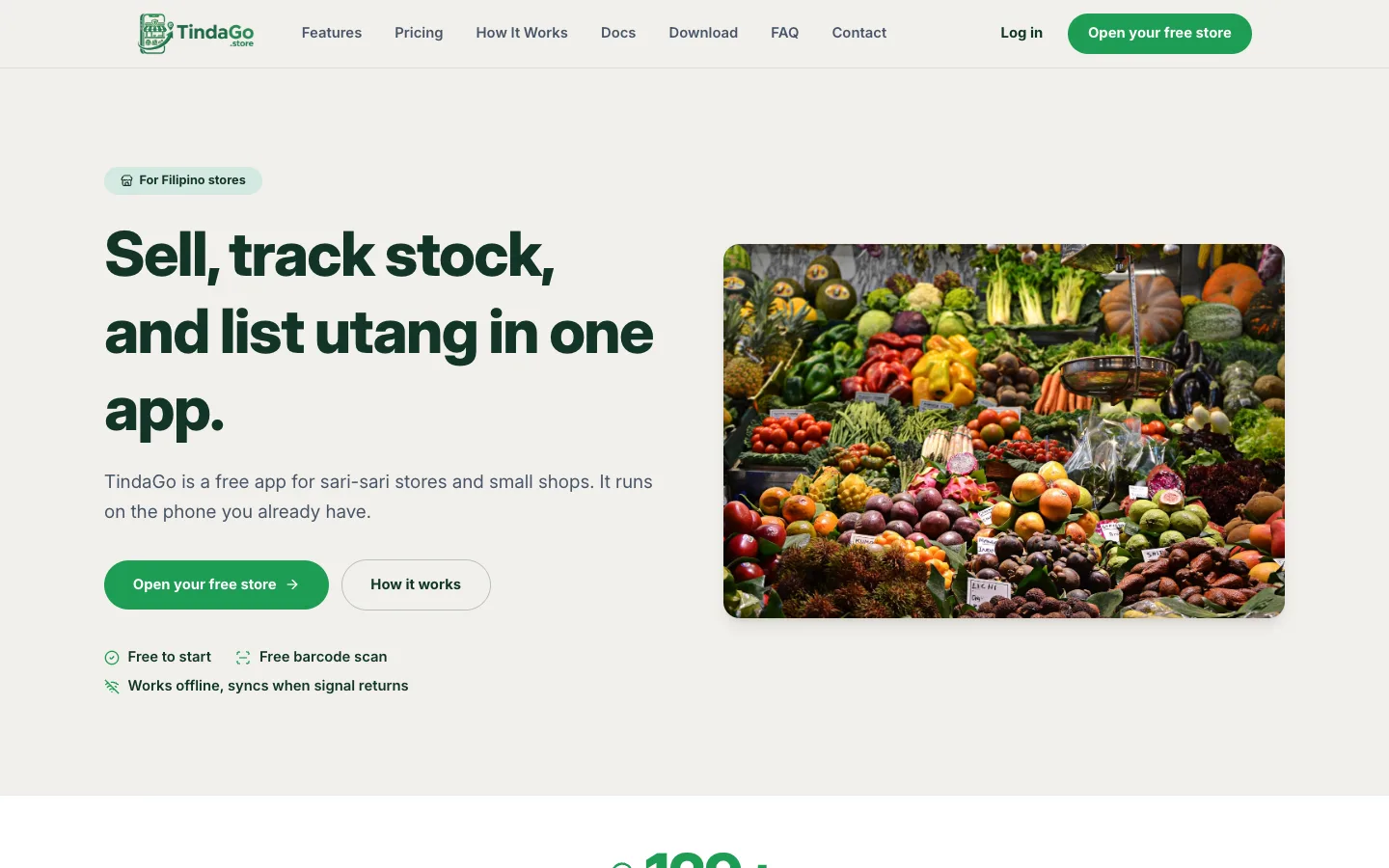
The notebook was the system. TindaGo replaces it gently.
Most sari-sari stores run on a notebook: stock counts in one corner, utang lists in another. Point-of-sale hardware is priced for supermarkets, not for a store built into the front of a house.
TindaGo puts the whole store on the phone the owner already has. Scan barcodes with the camera, take cash, GCash, Maya, or utang in one sale, and keep a tab per customer with limits and reminders.
Offline-first by design
Sales save on the phone during brownouts and sync back when the signal returns. In the provinces this is not an edge case, it is Tuesday.
Language the store speaks
The interface says tinda, utang, and kuryente, because that is what the work is called. No retail jargon to translate.
Grows with the store
Start free with inventory and sales. Add staff logins, branches, cashier shifts, and payroll when the store gets there.
Sixteen tools, one design system.
Inventory, services, sales, discounts, loyalty points, barcode scanning, branches, staff accounts, shifts, GCash float, bills, payroll, suppliers, and more, each built as a card in one consistent system.
Every tool follows the same layout logic, so a cashier who learns one screen has learned them all.
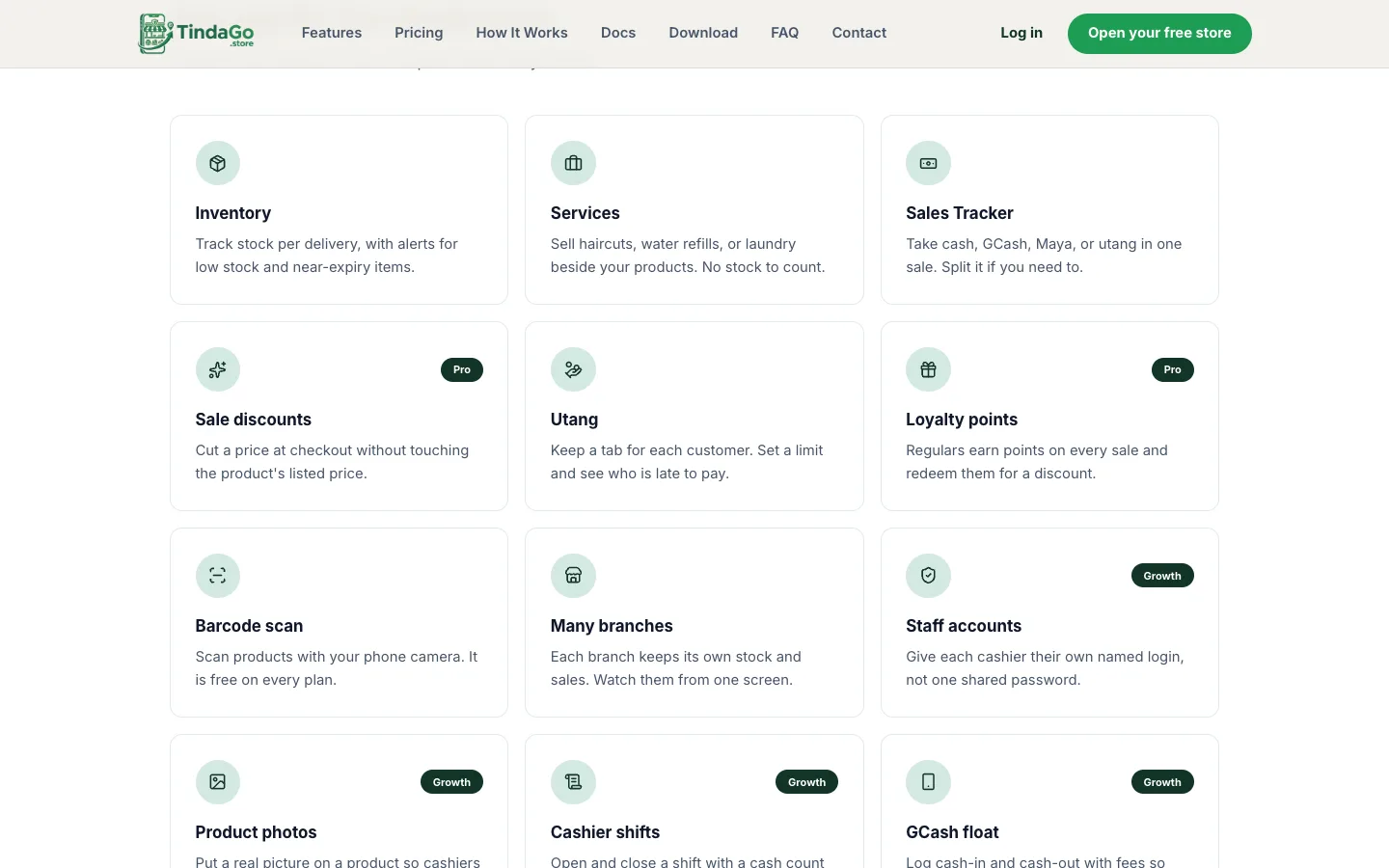
Where it stands today.
- 129+
- Stores, pharmacies, and groceries onboard
- 2
- Island groups covered: Mindanao and Visayas
- ₱0
- Hardware cost: no machine to buy, no training needed
Store owners upgrade inside the app with GCash or Maya. No bank transfers, no waiting for someone to confirm.